Frequently Asked Questions
What kind of pest and weed control practices do you use?
The short answer: only methods approved by the national organic standards, though we are not certified organic.
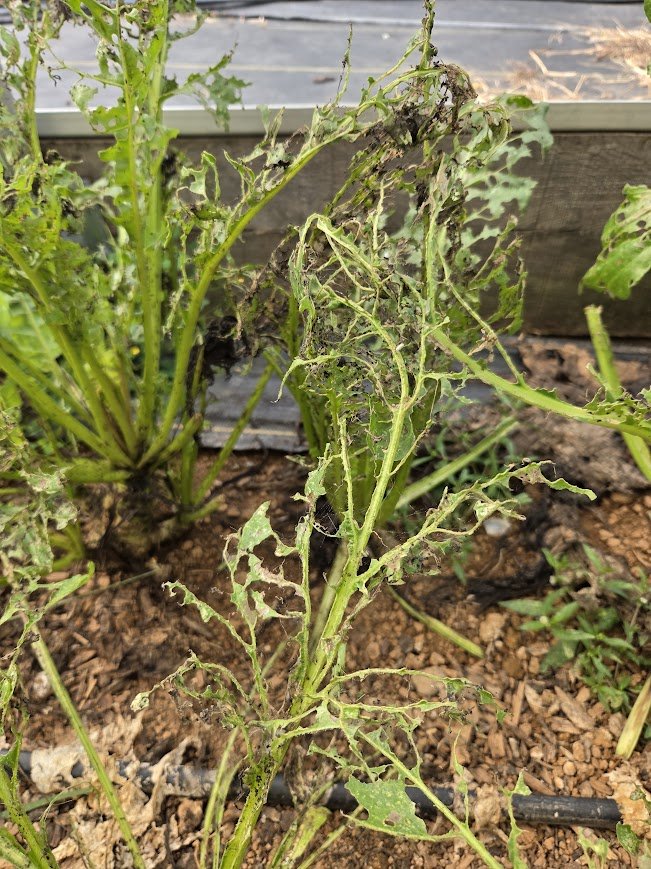
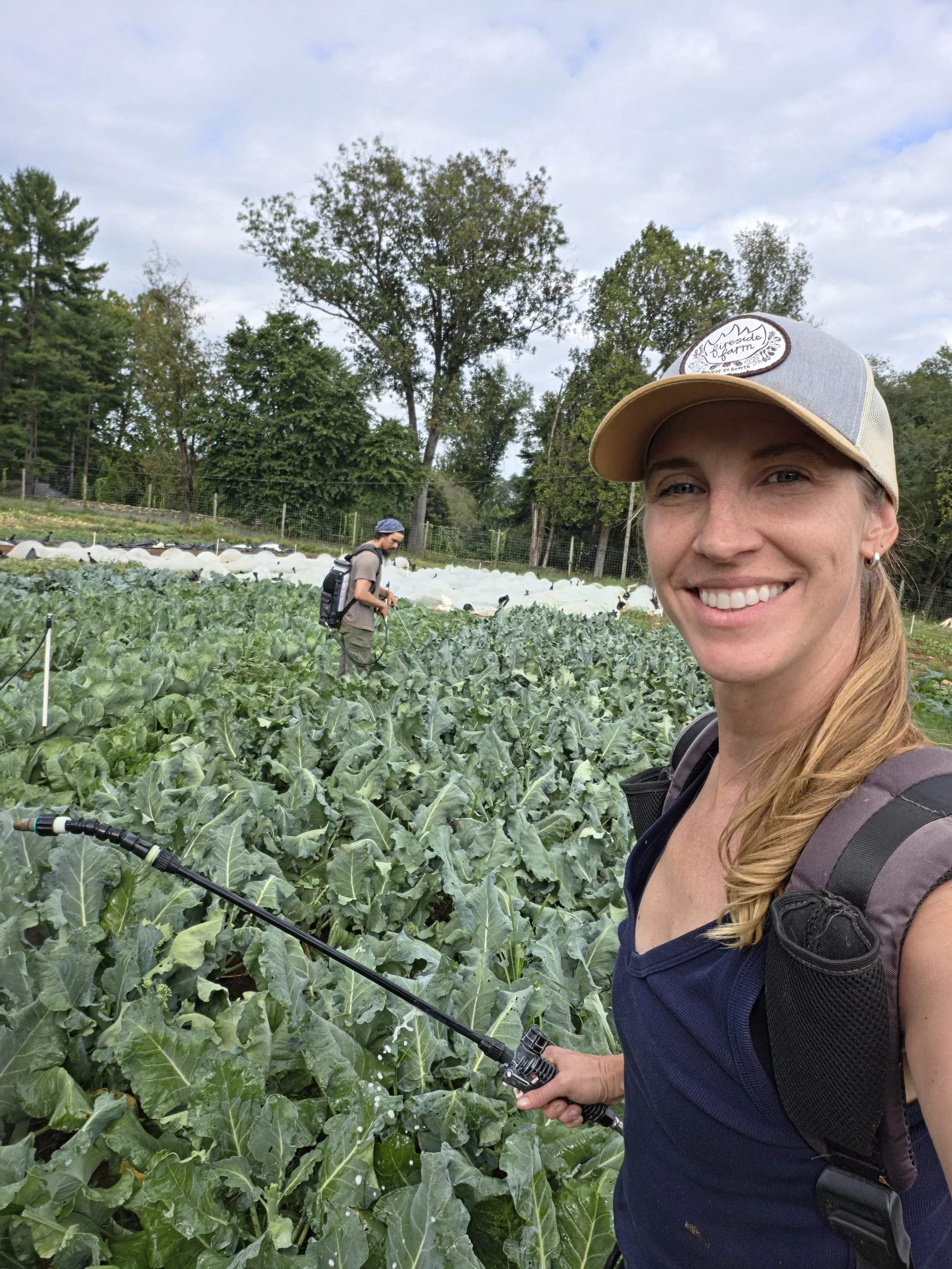
The longer answer: we use very few insect control methods and only ones that target the problem insects and preserve friendly pollinators. We regularly apply diatomaceous earth (a powder of fossils) to control flea beetles, and treat our brassica plants like kale and cabbage with bacillus thuringenisus (a biologic measure) to control the larvae that will eat them down to the stem (see photo at left). When we apply that, we add Neem oil to make sure the job gets done. Very rarely, if a problem is bad, we’ll apply a pytherin, but don’t even usually do this annually. Most of our crops will never be treated, and we never harvest a crop until days after it’s been treated.
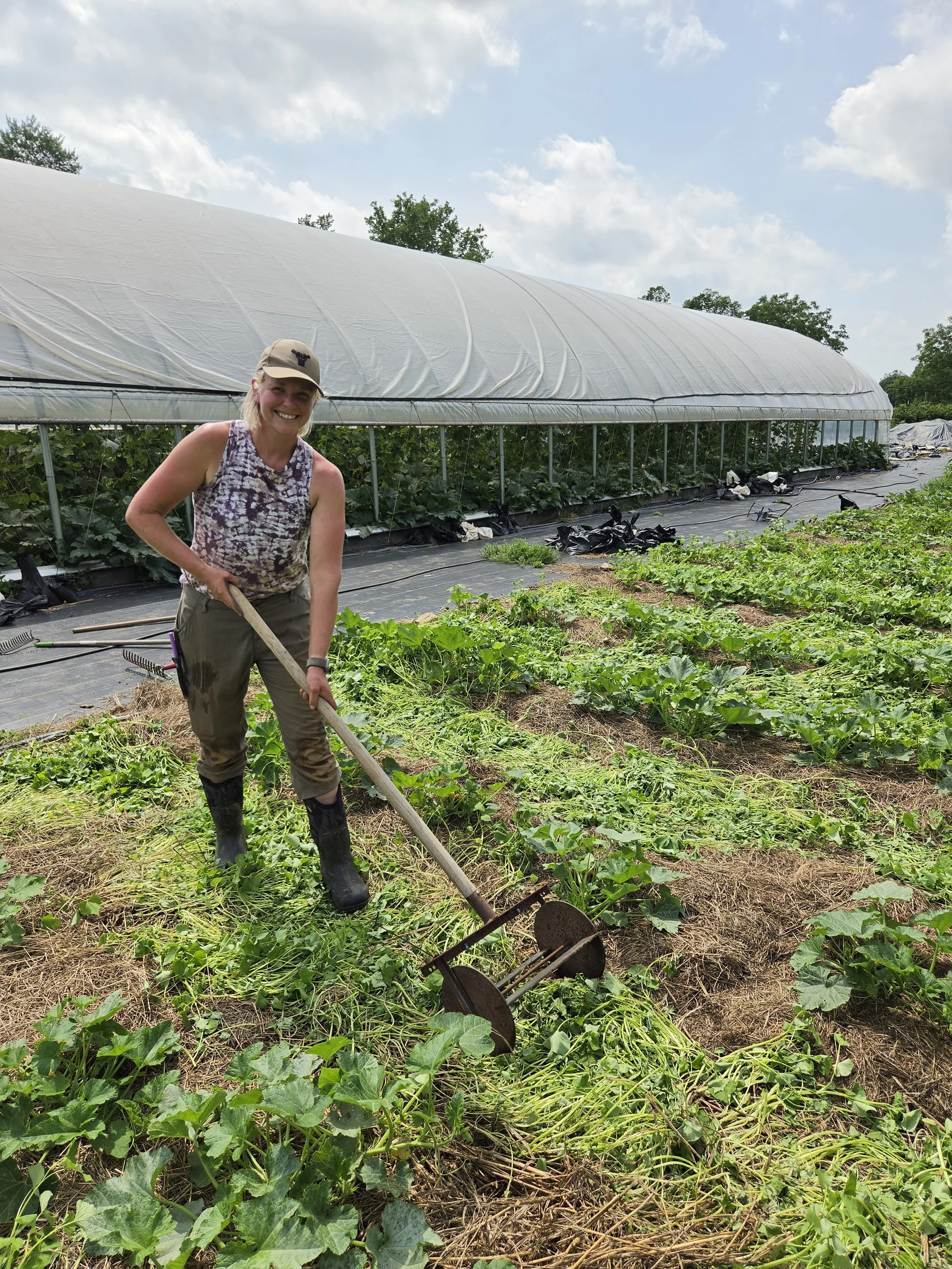
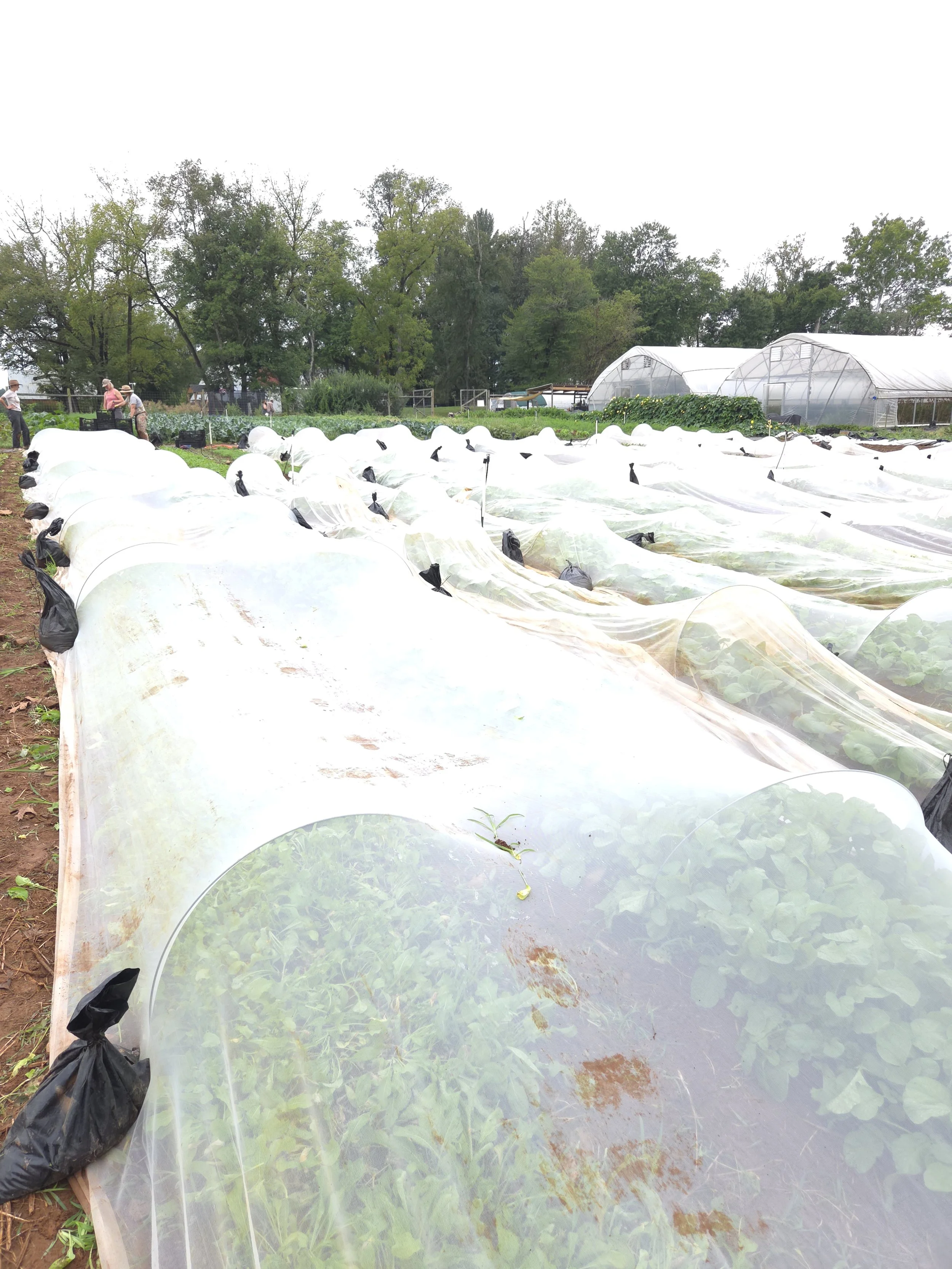
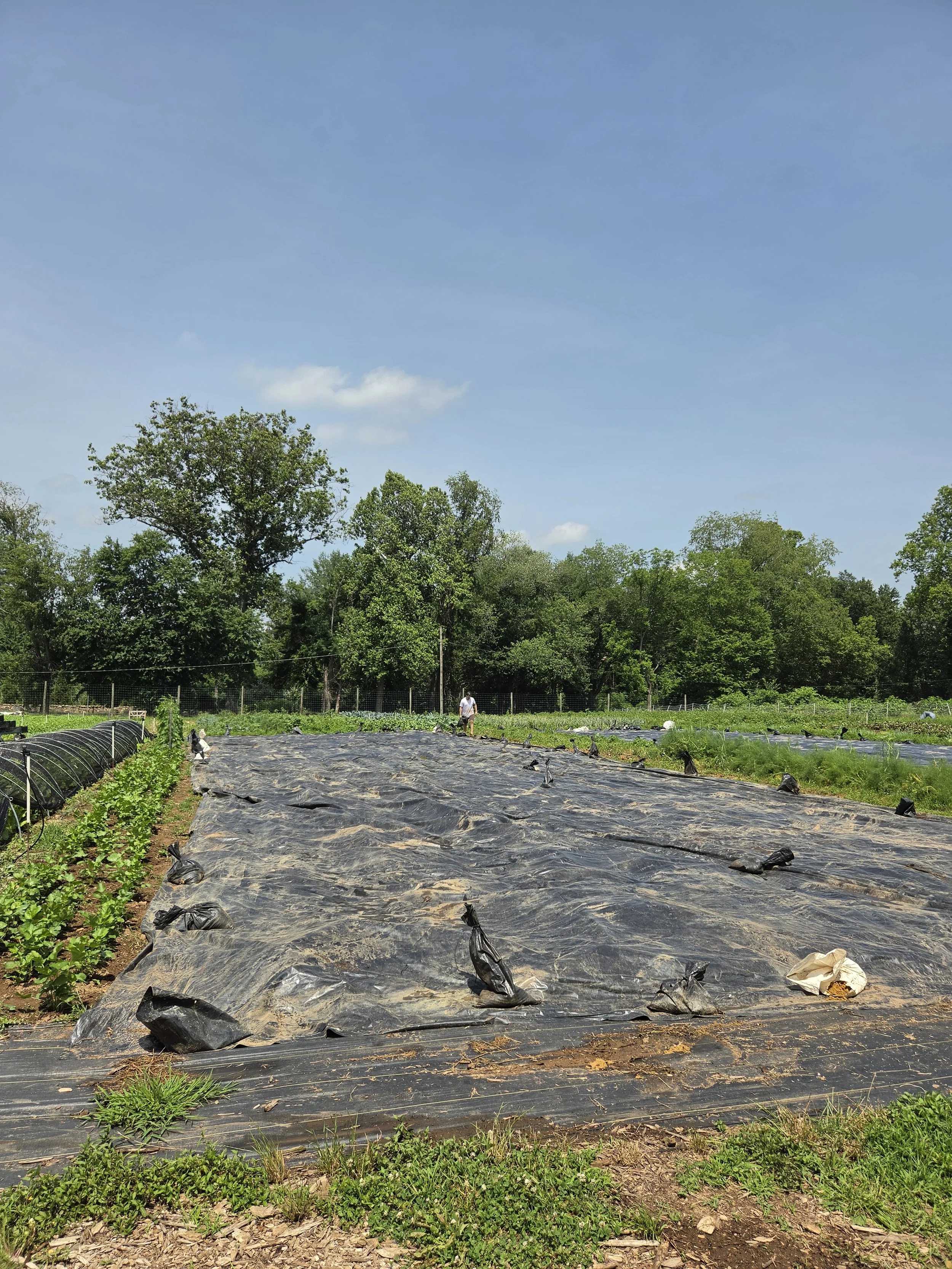
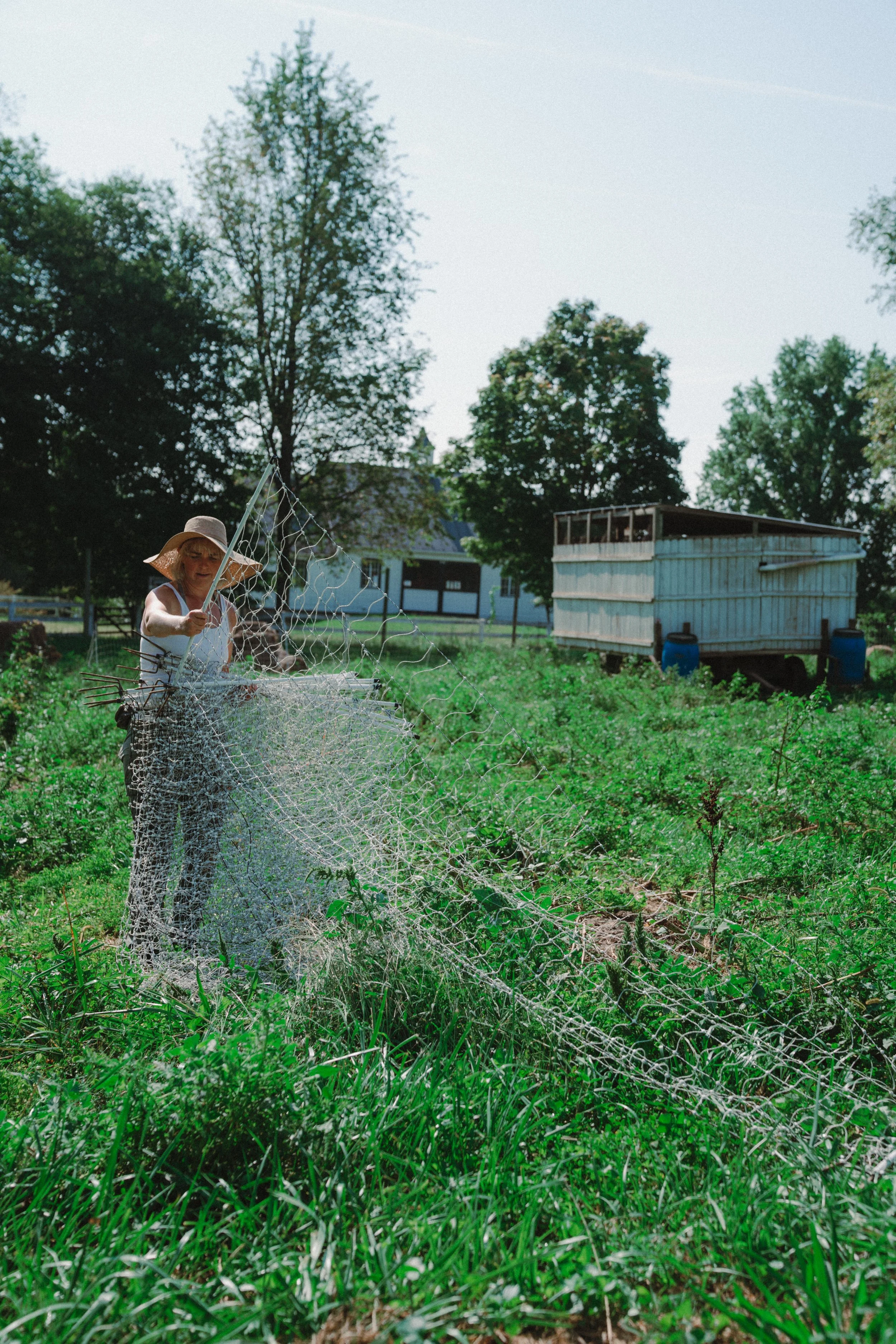
We apply row cover to prevent pests from finding some crops, and weeds are treated exclusively by burning and manual tools. Between seasons, we apply tarps to suppress weeds and prevent erosion. We also use cover crops or straw mulch between rows to out-compete weeds before they can germinate - every choice we make is to optimize the soil because healthy soil yields healthier plants that are better able to survive environmental challenges!
What type of feed do the chickens get?
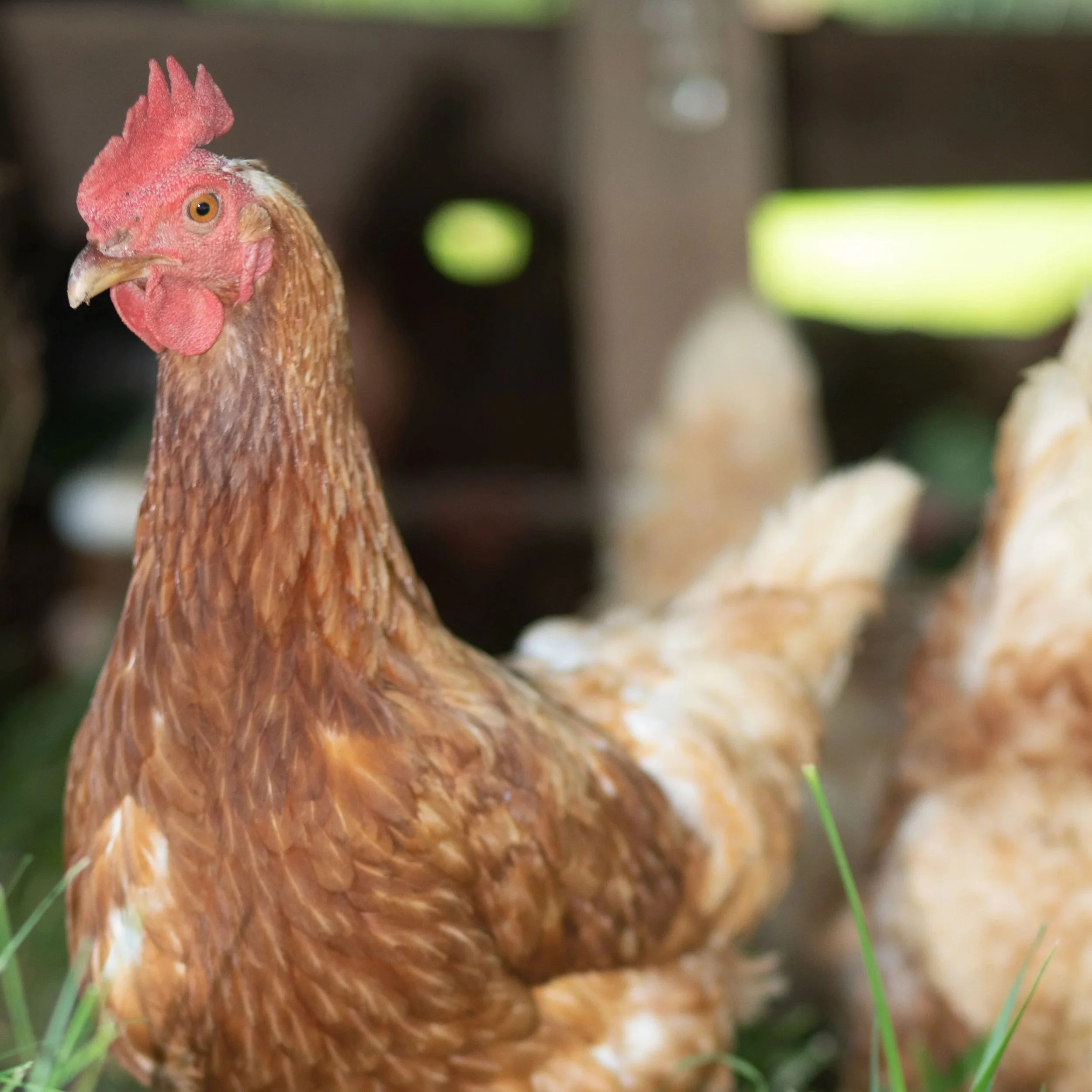
In addition to a lot of leftover produce, we use Dawson’s Gap non-GMO layer feed. It’s tested for glyphosate and GMOs, and provides all the essential nutrients laying chickens need.
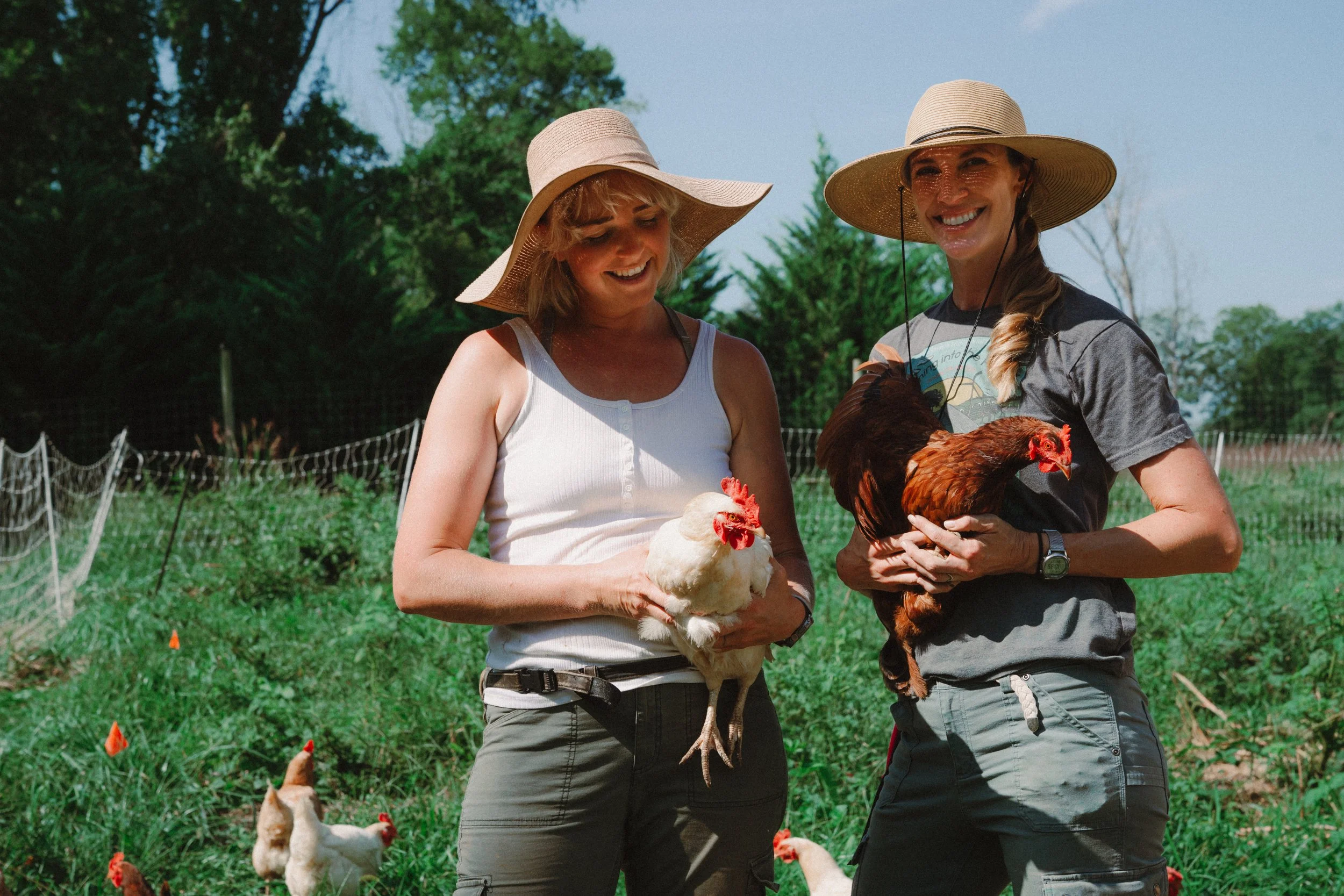
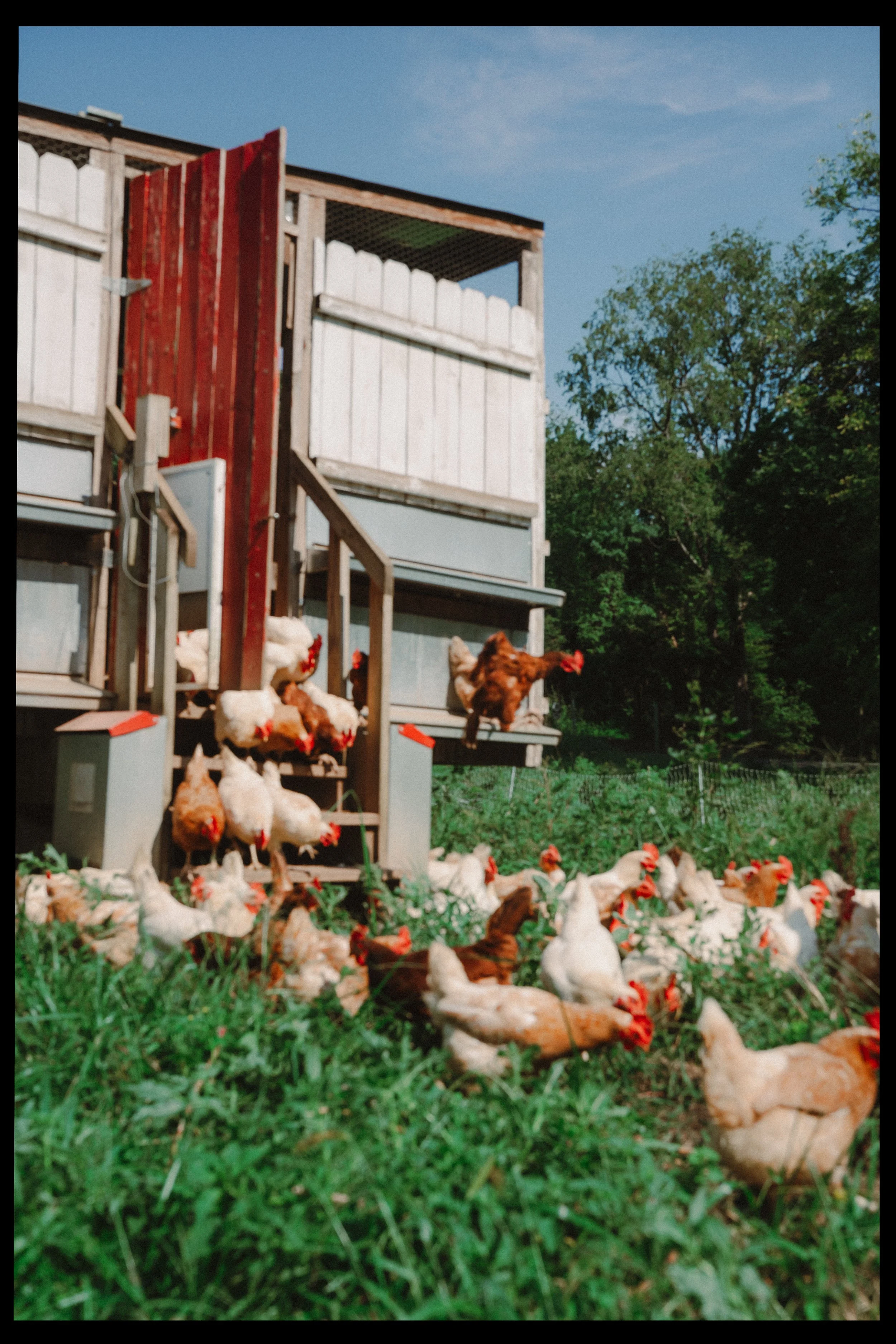
Our chickens live in a mobile coop, so they get access to fresh pasture daily (lots of bugs and worms to scratch for) and are moved regularly to stay healthy…this also treats our soil with extra nutrients! There is a required 90-day washout if they are placed anywhere vegetables grow (usually only over the winter). Their coop has a solar-powered, sun activated door that opens automatically in the morning and they see themselves in before it closes at dark for safety. They are also protected by electric fencing and a “wavy tube guy” that deters hawks.
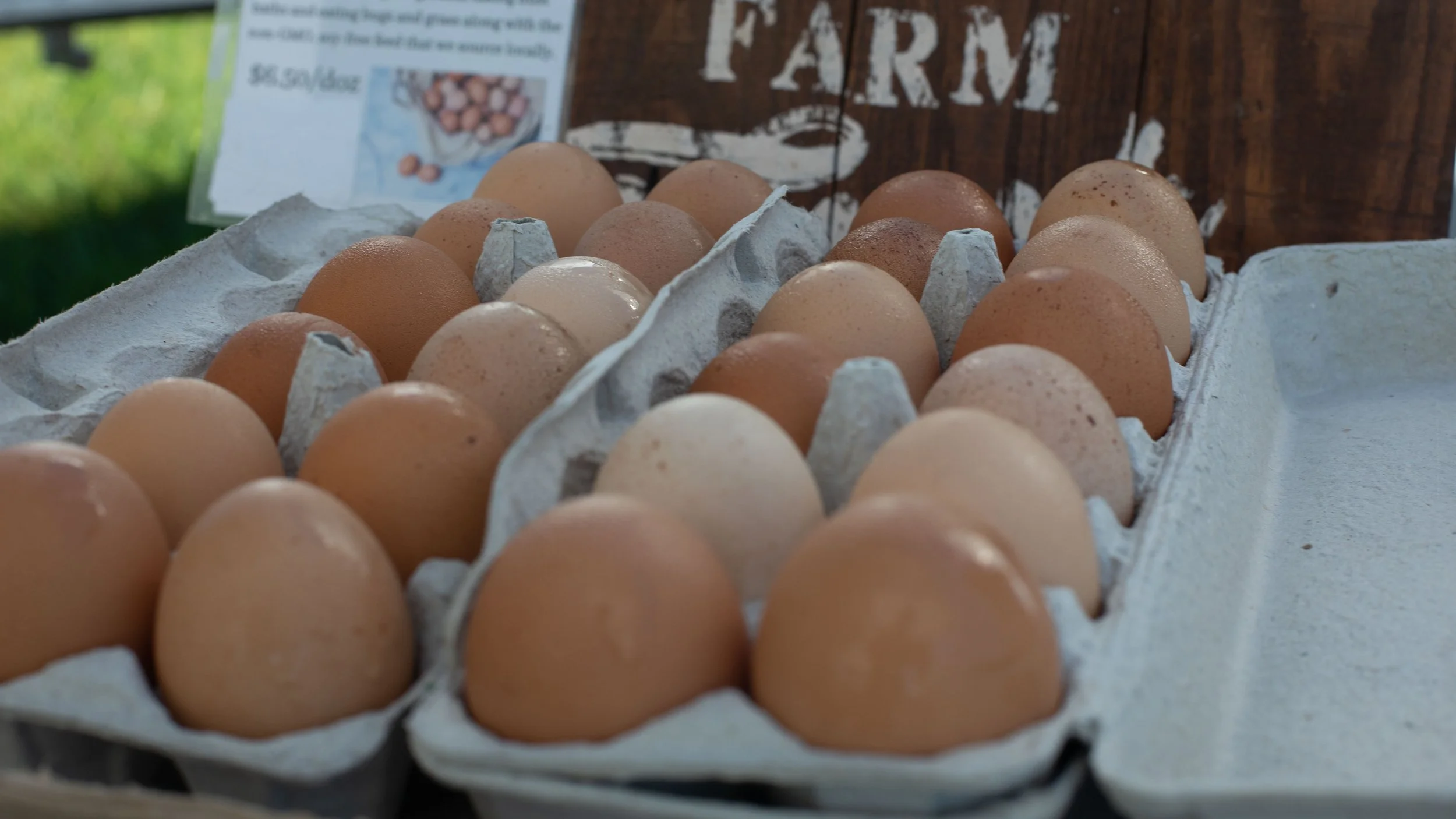
We are proud to purchase eggs from one of our employees who built the same coop and uses the same feed and practices to help meet the high demand of our regular customers. Many have told us they’ve never had a better egg!
How big is the farm?
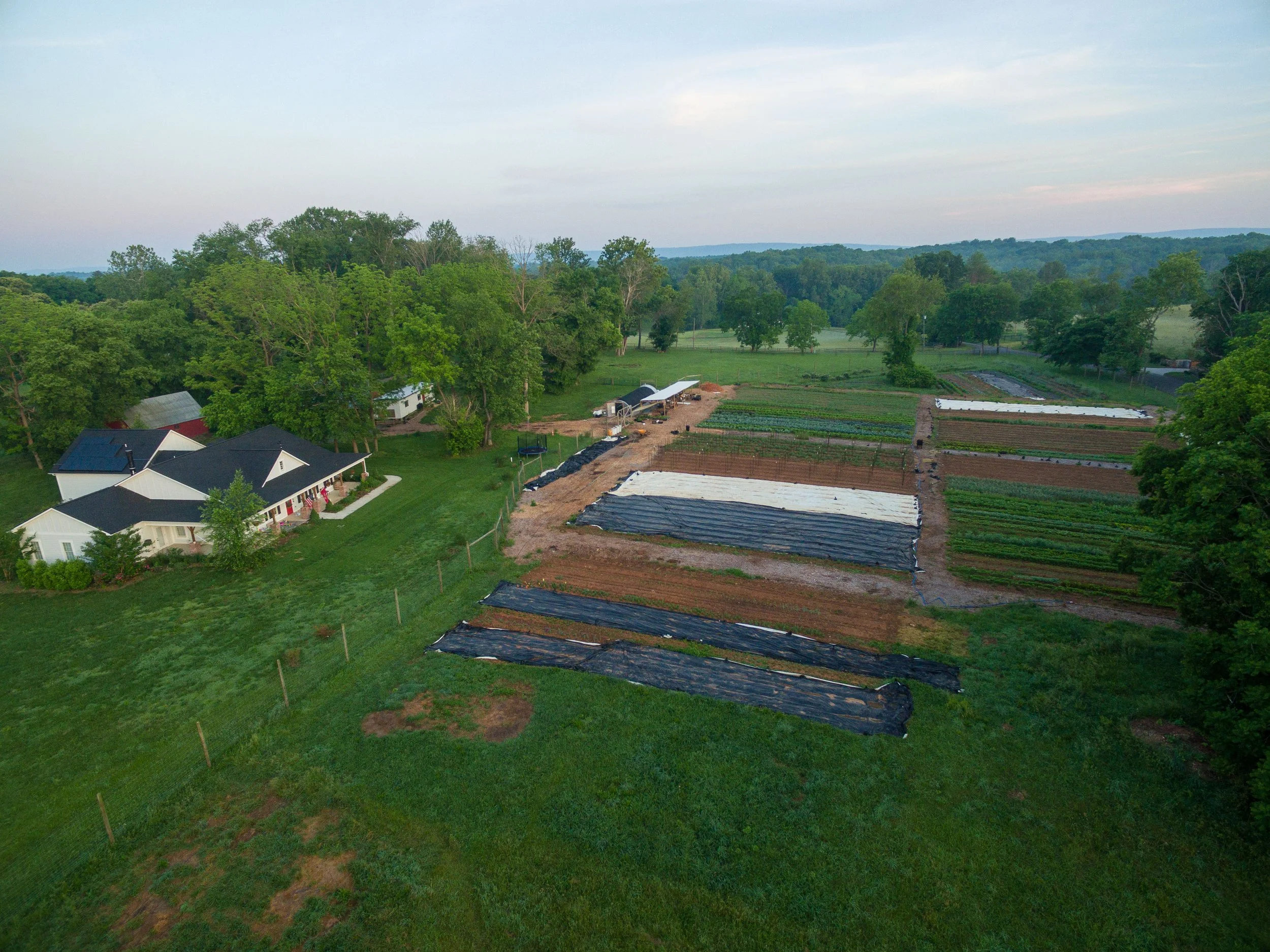
Physically speaking, Gathering Springs Farm is situated on 3 acres of Pam & Rob’s 13 acre property - up to 2 acres are regularly producing annual vegetables, while the rest provides some perennials and space to rotate the chickens.
In terms of personnel, there are 6 employees in addition to Pam & Sarah who work anywhere from 3-40+ hours a week. We regularly welcome volunteers, and some have come often enough to end up on payroll! The main season (April-November) requires the equivalent of 4 full time employees, but across the year no one is employed full time - including the owners! Sustainable farming also requires sustainable energy and many farmers burn out before they’re 40…we’re aiming for 75.
-
Yes, if you plan ahead! We host events, and are open during the Loudoun Farm Tour weekends in the Spring and Fall. While we are not open regularly to receive guests without notice, we do schedule tours for small groups - $10 per person with a minimum of 5 people. We also accept groups of school children, scout packs, and garden clubs…just email us to schedule!
The self-service Shop at the farm is open 8am-8pm daily.
-
Your food choices touch everything - from your health to the local economy to national security. Most food in grocery stores is grown by huge farms that aren’t closeby.
Remember, “family owned” is a popular label, but doesn’t mean anything about what farming practices are used. Produce varieties are usually chosen based on what ships well, holds for a long time, or looks good…nutrition isn’t a consideration. Additionally, food may be harvested well in advance of when you eat it, which means volatile nutrients like Vitamin C are reduced.
Eating locally not only keeps your money circulating nearby and supporting your community, but means you get fresher, higher quality products that can lead to better health. Being able to talk to your farmer and ask questions is a huge perk!
-
We are weekly vendors at Haymarket Farmer’s Market, open April-mid November on Sundays 9am-1pm.
In July of 2025, we opened a self-service Farm Shop that is open 8am-8pm.
You can also join our CSA which has pickup sites at a few locations in the region!